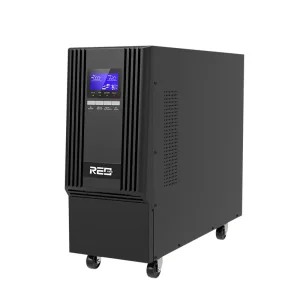
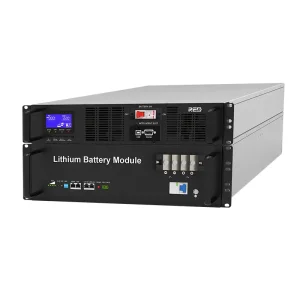
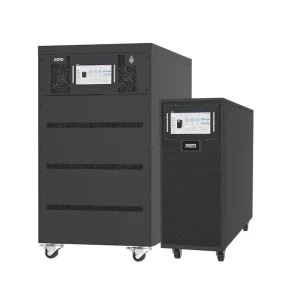
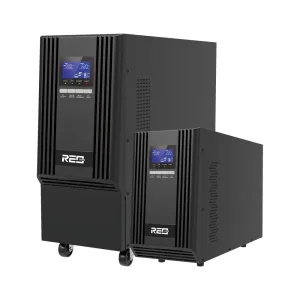
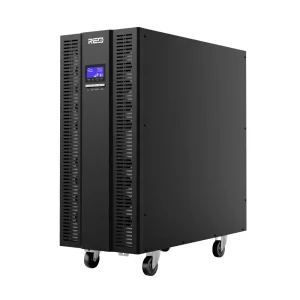
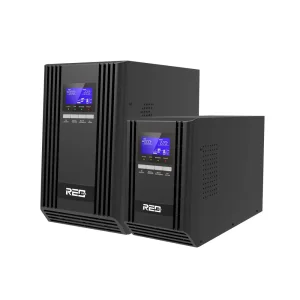
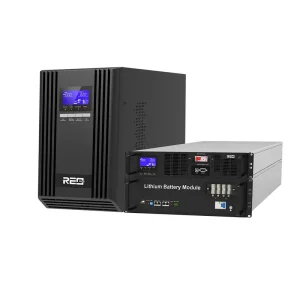
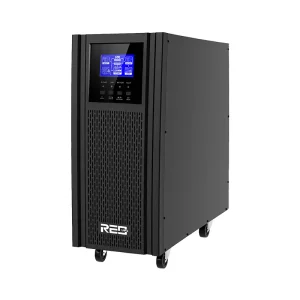
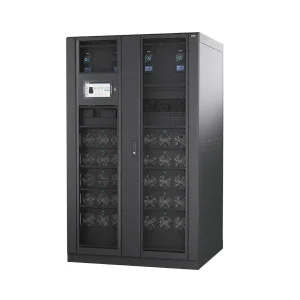
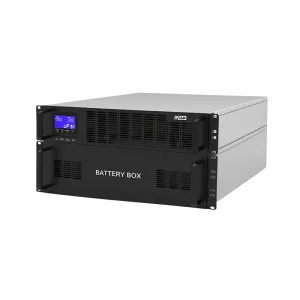
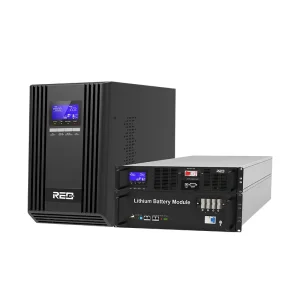
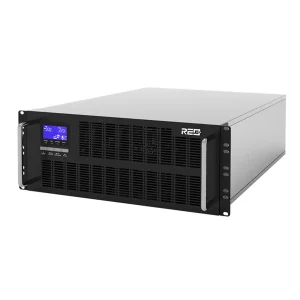
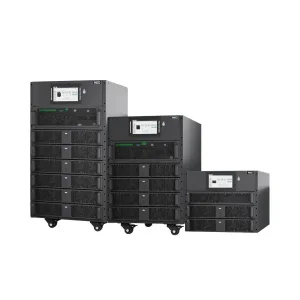
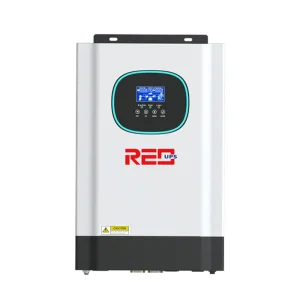
Explore our industrial-grade, highly-configurable UPS line-up manufactured to global engineering standards.
In today's highly automated, data-driven macro economy, power quality issues cause billions in operational losses annually. Standard utility power grids are increasingly vulnerable to voltage sags, harmonics, transient surges, and complete blackouts. For critical hardware like server clusters, telecom nodes, factory automation cells, and advanced diagnostic healthcare equipment, a dedicated power protection layer is non-negotiable.
The 5kVA online double-conversion UPS serves as the key technical "sweet spot" for decentralized architecture. It offers sufficient capacity to handle complex, non-linear system startup profiles while maintaining a compact footprint that easily integrates into modular IT racks, medical carts, or remote utility enclosures.
How Shenzhen REO Power leverages custom engineering to resolve power constraints across core global markets.
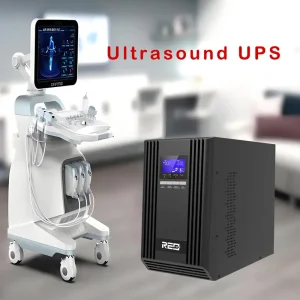
Ultrasound machines, clinical laboratory analyzers, and monitoring systems cannot tolerate millisecond disruptions. Our specialized medical models (such as the Maxwin Pro 3KW/5kVA equivalent series) feature enhanced isolation transformers to isolate ultra-sensitive medical electronics from common-mode electrical noise and leakage current risks, fully adhering to stringent hospital safety protocols.
As networks decentralize, regional micro data hubs require rugged, highly efficient 19-inch rack-mounted power. Our 5kVA online designs integrate natively with network protocols (SNMP, Modbus) for zero-downtime automated shutdown sequences, dynamic thermal sensing, and dual-source inputs ensuring 99.999% uptime for cloud service extensions.
Factory environments are filled with harsh electromagnetic interference (EMI), variable motor loads, and harmonic distortion. We configure our UPS modules with conformal-coated PCBs, rugged physical steel enclosures, and optimized input power factor correction (PFC) systems to withstand temperature swings and inductive load kicks in heavy manufacturing environments.
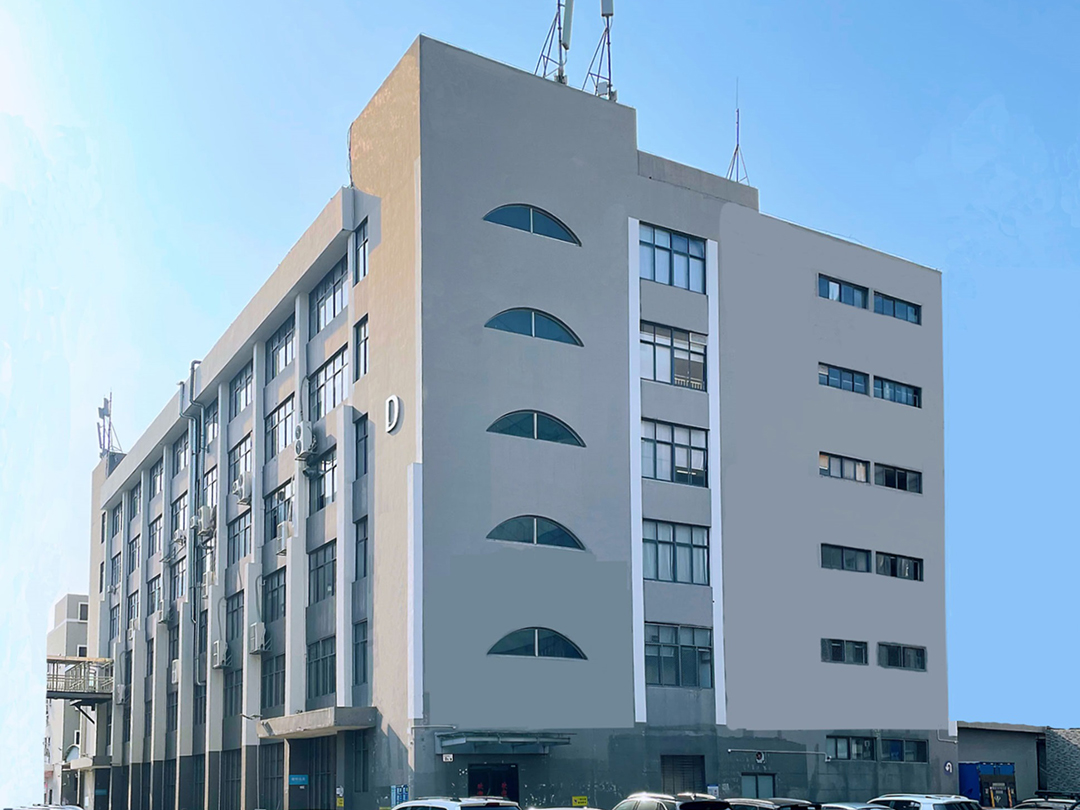
Shenzhen REO Power Co., Ltd. has built a reputation for high-precision OEM and ODM services. Leading our manufacturing innovation is a CTO-led research team with over 20 years of experience in custom hardware, software parameter adaptation, and specialized cabinet layout engineering.
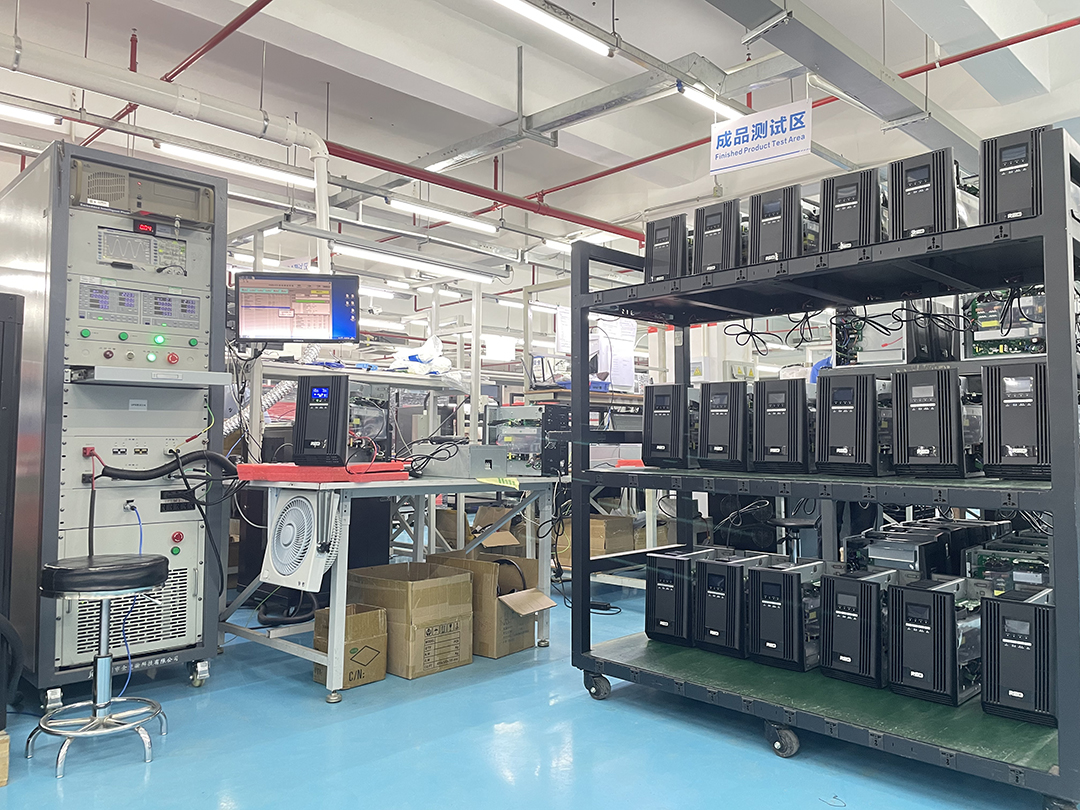
We do not simply assemble; we implement end-to-end automated manufacturing protocols designed to guarantee zero defects. Our lines utilize automated optical inspection (AOI), in-circuit testing (ICT), functional testing (FCT), and advanced automatic test equipment (ATE) loops to monitor every unit's electrical integrity.
A look at the internal components and modern engineering pathways powering REO Power's UPS systems.
| Technical Characteristic | VRLA Lead-Acid Systems (Legacy) | Lithium Iron Phosphate (LiFePO4) Systems (Modern) |
|---|---|---|
| Lifespan & Cycle Count | 300 - 500 deep discharge cycles (3-5 years) | 2000 - 4500 deep discharge cycles (8-10+ years) |
| Power Density & Footprint | Low density; heavy footprints requiring reinforced racking | Ultra-high density; up to 60% reduction in weight/space |
| Operating Temperature | Optimal performance constrained strictly to 20°C - 25°C | Maintains stability from 0°C to 45°C without system degradation |
| Total Cost of Ownership (TCO) | Low entry cost, high maintenance and replacement costs | Slightly higher initial investment offset by zero maintenance and 10-year lifespan |
| BMS Integration | Basic voltage sensing, no cell-level balancing controls | Integrated active BMS for real-time temperature, safety and charge tuning |
Our future engineering focus aligns with global energy-saving mandates and decentralized edge architecture trends. By implementing advanced wide-bandgap (SiC/GaN) power semiconductors, our future double-conversion online UPS systems will target conversion efficiencies of over 97% in active double-conversion mode, significantly lowering operational cooling expenses. Furthermore, our development path integrates artificial intelligence-driven predictive diagnostics, which monitor battery bank charge degradation patterns and cooling-fan wear parameters to alert operators before failure occurs.
Higher switching frequencies, lower thermal dissipation, and elevated power factor correction capabilities.
Firmware logic allows the battery bank to discharge during peak local tariff rates, reducing facility utility costs.
Industry-standard secure communications for seamless integration into cloud-based network operating centers.
Aligning structural and functional configurations to meet your regional market requirements.
Ensuring compliance across regional grids, safety directives, and environmental standards.
All systems undergo rigorous tests for efficiency, electromagnetic compatibility (EMC), and electrical safety (IEC 62040-1, -2, -3) to ensure safe, stable operation under nominal and overload conditions.
Our products are fully certified for European and associated global markets, verifying the reliability of our insulation systems, surge protection paths, and thermal safety controls.
Our 13,500㎡ facility follows certified quality management protocols, covering everything from component sourcing to trace assembly and tracking records for each finished unit.
Technical guidance for procurement managers, systems engineers, and distributors.
How does a 5kVA online double-conversion UPS differ from a line-interactive unit?
An online double-conversion UPS processes input AC power through a rectifier to DC, then back to clean AC via an inverter. This isolated path ensures zero transfer time (0ms) and complete protection against voltage sags, frequency deviations, and harmonic distortion. Line-interactive systems rely on a relay bypass and buck/boost transformers, which introduce a 4-10ms transfer lag and provide minimal protection against voltage wave distortion.
What customizable software parameters can be configured during the OEM process?
Through our CTO-led engineering team, you can customize shutdown voltage thresholds, active charge curves (for custom lead-acid or LiFePO4 configurations), nominal frequency controls (50/60Hz autosensing or forced), warning alarms, bypass voltage ranges, and MODBUS communication address parameters.
How does Shenzhen REO Power support split-phase and dual-voltage distribution?
We configure our UPS lines for regional grid standards, including split-phase systems (220V input with balanced 110V + 110V output configurations) common in North America, standard single-phase (220V/230V/240V), and balanced three-phase environments, ensuring seamless integration with your local site wiring.
What testing protocols does the factory use to prevent initial field failures?
We utilize a rigorous testing protocol: every component is verified using AOI, ICT, and FCT systems. Following assembly, 100% of units run through an uninterrupted 8-hour thermal burn-in test under full rated load. Finally, we run automated ATE diagnostics before authorizing shipment, ensuring high reliability in the field.
What are the typical lead times and minimum order quantities (MOQ) for custom UPS chassis?
Standard production cycles range from 20 to 35 days, depending on custom requirements. We maintain flexible MOQ policies, starting at 10-50 units for localized OEM logo branding and custom packaging configurations, and up to 100+ units for structural chassis redesigns or specialized internal component layouts.
Explore our complete range of online double-conversion UPS, rack-mount systems, and modular power solutions.
 REO UPS