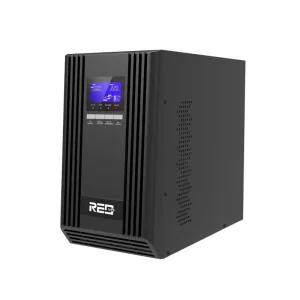
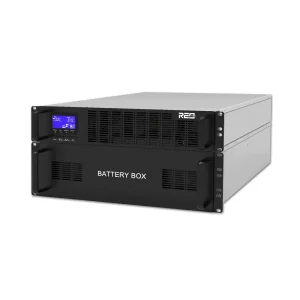
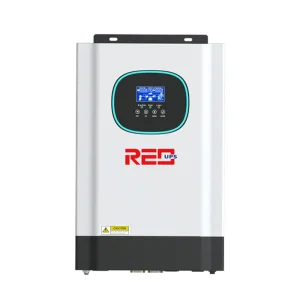
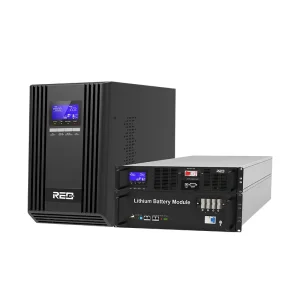
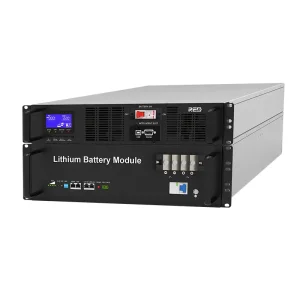
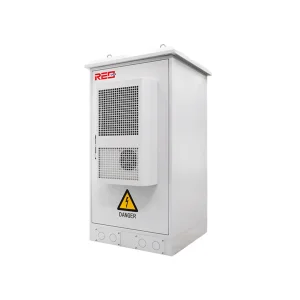
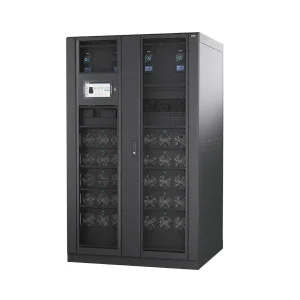
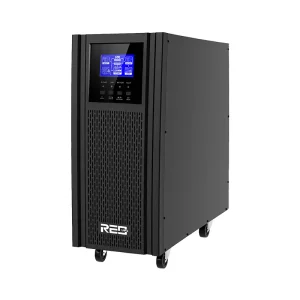
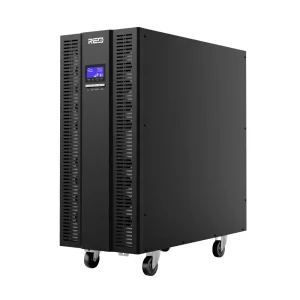
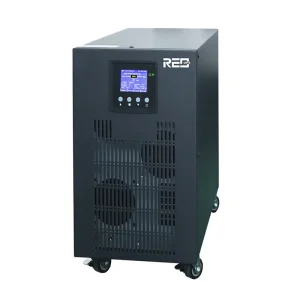
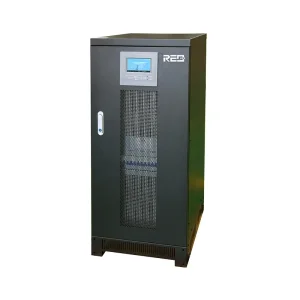
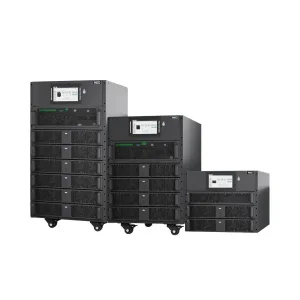
Explore our engineering capabilities across enterprise server systems, medical configurations, and outdoor installations.
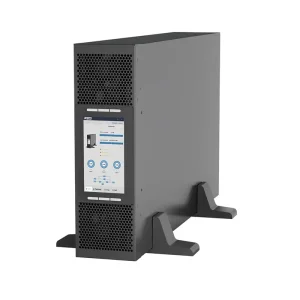
As global computational requirements migrate toward edge deployments and distributed data centers, power quality (PQ) management has evolved from a utility contingency into a core architectural requirement. The 2000VA (2kVA) Rackmount Online Double-Conversion UPS stands as the absolute sweet spot for network closets, medium density server enclosures, and high-performance automation arrays.
Unlike consumer-grade line-interactive backups, commercial double-conversion systems continuously rectify incoming AC utility power to DC intermediate bus voltages before reconstructing a clean, sinusoidal AC output wave. This process completely decouples the protected equipment from voltage sags, micro-interruptions, transients, harmonic distortions, and frequency shifts. By working directly with an ODM factory, enterprise buyers can fine-tune physical configurations, input voltages (110V/220V split-phase designs), communications protocols, and energy density matrices.
Double-conversion topology provides absolute isolation from utility grid anomalies. Inverter run-times shift instantly to internal battery storage without a single millisecond of power gap (0ms transfer time).
Our standard 2U structural height utilizes high-density sub-modules. By maximizing power efficiency and airflow layout, it preserves valuable rack space for servers, switches, and patch panels.
Centralized digital signal processor algorithms manage power factor correction, battery health, bypass logic, and communications busses, replacing failure-prone analog controls.
The hardware architecture of rackmount uninterruptible power systems is experiencing tectonic technological transitions. As energy efficiency codes become more stringent globally, manufacturers must shift toward high-performance topologies. REO Power keeps a clear view of tomorrow’s technologies in current development phases:
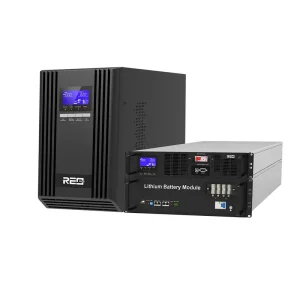
Standard lead-acid (VRLA) batteries are increasingly replaced by Lithium Iron Phosphate (LiFePO4) technology. LiFePO4 chemistry yields a lifecycle of up to 10 years (3000-5000 cycles) compared to just 3-5 years for VRLA. They operate stably at higher temperatures and reduce overall physical weight by up to 50% in standard Lithium-Ion Power UPS 1-3KVA systems.
Integrating Gallium Nitride (GaN) and Silicon Carbide (SiC) switches directly reduces internal heat loss, allowing converters to run at higher switching frequencies. This technical advancement helps decrease the footprint of filter inductors and transformers, yielding power densities exceeding 96% efficiency under full rated load.
Modern system operators require predictive monitoring over SNMP v3, Modbus TCP, or HTTPS protocols. Future systems integrate machine learning diagnostics directly on the control chips to monitor degradation parameters and issue preventative maintenance alerts before faults occur.
In peak load conditions, smart UPS systems feed stored energy back to the micro-grid or selectively shut down non-critical outlets via intelligent PDU integration. This functionality helps data centers manage high utilities costs during heavy demand cycles.
A premium UPS manufacturer based in Shenzhen, China. We possess extensive R&D and production capabilities supplying single-phase, split-phase, three-phase, lithium-ion, modular, and outdoor UPS architectures along with grid solar systems.
Our manufacturing facilities operate under strict ISO9001 quality compliance, ensuring every system conforms to international safety and reliability rules including CE and IEC standard tests. Led by our CTO who brings over 20 years of technical design experience, we work as co-creation partners helping our clients capture competitive market advantages.
Inquire for ODM PartnershipDifferent application environments present unique stress points. Standardized consumer UPS units often fail when subjected to specific structural stresses, high ambient temperatures, or irregular electric frequencies. We build application-optimized models for major sectors:
Edge server systems require low physical profile footprints, minimal noise emissions, and active remote systems management. Our 2000VA UPS integrates with standard network cards to execute automated orderly operating system shutdowns when mains power fails.
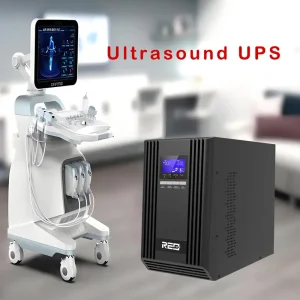
Medical equipment like ultrasound systems or life monitoring apparatus are highly sensitive to electromagnetic interference. We build customized ultrasound medical UPS solutions with low leakage currents and active galvanic isolation.
Factories contain dusty air, high vibration levels, and fluctuating mains voltage lines. We customize ruggedized systems utilizing conformal-coated electronics, robust mechanical steel cabinets, and wide thermal operating windows.
Operating out of Shenzhen, the hardware manufacturing capital of the world, REO Power utilizes a robust ecosystem of electronic component suppliers, sheet metal fabricators, and advanced tooling factories to maintain short production lead times and optimize cost structures.
To guarantee 99.9% uptime reliability in field applications, our production floors are equipped with modern testing configurations, including:
Unlike manufacturers that rely on randomized batch testing, REO Power subjects 100% of finished units to an intensive 8-hour continuous thermal burn-in test at maximum rated capacities.
Double ATE testing (conducted once after mechanical assembly and again post-burn-in) guarantees zero-day failures are caught inside the factory rather than at your client's server facilities.
| Manufacturing Stage | Inspection Technology Applied | Target Failure Modes Prevented | Testing Coverage |
|---|---|---|---|
| PCB Assembly | AOI & ICT Diagnostics | Cold joints, component misalignment, short-circuits | 100% of manufactured boards |
| System Integration | ATE Test Phase 1 | Wiring configuration errors, voltage calibration anomalies | 100% of assembled units |
| Load Stressing | 8-Hour Active Burn-In Chamber | Infant mortality of semiconductors, thermal runaway | 100% of assembled units |
| Final Verification | ATE Test Phase 2 & Vibration Bench | Post-thermal drifts, loose hardware connections | 100% of assembled units |
Importing electrical equipment requires strict alignment with safety regulations, local electrical grids, and hazardous substances directives. We support complete localization of our hardware platforms to simplify market access for global distributors:
Our systems comply with safety standards CE, IEC 62040-1 (Safety), and IEC 62040-2 (EMC). Hardware versions can be customized to receive local compliance marks such as UL1778 for North American configurations.
Our metal chassis backpanels are configured with standard IEC C13/C19 connections, NEMA 5-20R or L5-20P configurations, British Standards, Schuko sockets, or custom terminal blocks.
All production processes run in full compliance with RoHS and WEEE mandates. Materials and internal batteries are carefully tracked and labeled to support localized disposal and circular economy recycling initiatives.
When procuring enterprise UPS systems, looking only at the acquisition cost can result in higher long-term expenses. Strategic procurement professionals evaluate factors that determine the product's lifespan:
Inverter efficiency directly influences daily heat dissipation and energy consumption. Operating a 2000VA UPS with 95% efficiency instead of 88% over five years reduces cooling costs and electric consumption, saving significant money per rack slot. Our systems support high-efficiency ECO modes that achieve up to 98% efficiency under stable grid conditions.
Critical processes require scalable runtime capacity. We build our rack cabinets to connect with External Battery Packs (EBP). Maintenance personnel can hot-swap degraded battery trays without interrupting the primary load, helping maintain high continuous uptime.
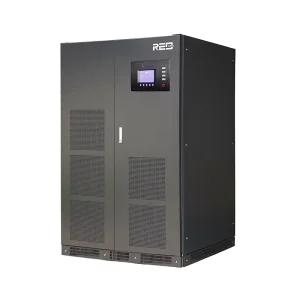
Review our specialized low-frequency, high-capacity, and modular hot-swappable architectures.
 REO UPS