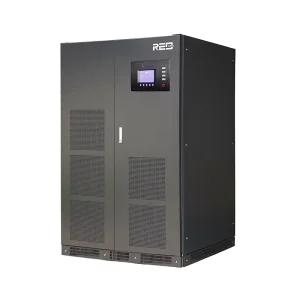
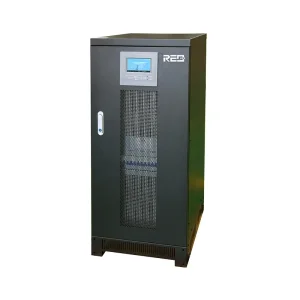
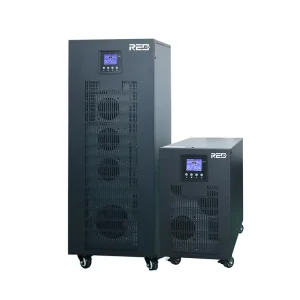
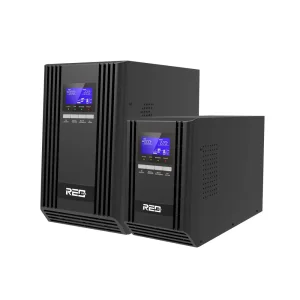
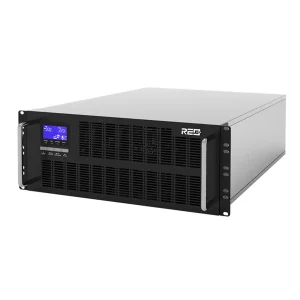
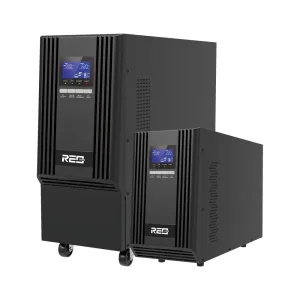
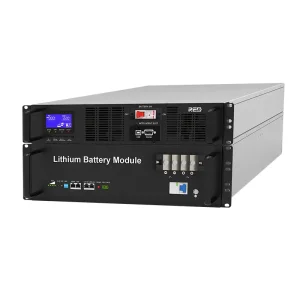
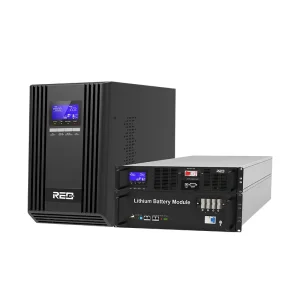
Designed for commercial centers, harsh desert environments, and remote operations across Windhoek, Walvis Bay, and the Erongo region.
Namibia is undergoing rapid industrial growth, fueled by mining projects in the Erongo Region, port expansions at Walvis Bay, and urbanization in Windhoek. However, the nation's energy supply faces complex challenges. Much of Namibia’s electrical supply is imported via the Southern African Power Pool (SAPP), exposing local industries to regional grid instability, load-shedding risks, and unpredictable voltage sags.
For small to medium enterprises (SMEs), retail operations, and IT networks, continuous uptime is non-negotiable. Offline UPS systems are the first line of defense. They offer high efficiency and cost-effective backup during transient power disruptions, ensuring that critical data, point-of-sale systems, and sensitive laboratory equipment remain operational during grid switches.
In Namibia's arid climate, electrical equipment must also handle high ambient temperatures and fine dust. This requires robust engineering, thermal dissipation mechanisms, and durable enclosures. Standard consumer-grade power strips are not enough; Namibian industries need industrial-grade, site-adapted UPS systems to protect their critical operations.
For over two decades, we have engineered certified power protection solutions, delivering high-reliability systems from our state-of-the-art facilities directly to global distributors and projects.
Located in Shenzhen, the global hub for power electronics, REO Power accesses a mature, integrated supply chain. We optimize raw material procurement, PCB assembly, and chassis construction to offer high-quality engineering at competitive prices, giving our distributors a market advantage.
Quality is built into every step of our process. Our facility features advanced diagnostic tools including AOI, ICT, FCT, and ATE systems. Every single UPS goes through an 8-hour full-load burn-in process and double ATE testing, ensuring reliable performance in demanding, hot, and remote environments.
Led by our CTO with over 20 years of R&D experience, we customize hardware and software to fit specific local requirements. From adjusting output voltage parameters to modifying chassis designs for dust-heavy environments, we design and adapt systems to meet the unique needs of our partners.
Understanding the engineering differences helps you select the right protection for your specific infrastructure and load requirements.
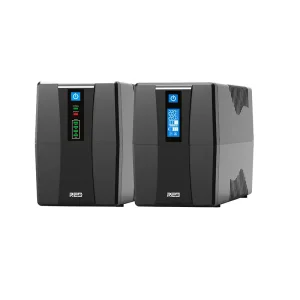
An Offline UPS (also known as a standby UPS) feeds utility power directly to the load during normal operations. The built-in inverter remains on standby. If the utility voltage drops below a preset limit or fails completely, an internal transfer switch shifts the load to the inverter-battery path.
The main advantage of this topology is efficiency. Because the inverter only runs when the main power fails, normal operation is highly efficient (often exceeding 98%). This design reduces heat generation, extends the lifespan of internal components, and keeps costs down. It is ideal for office PCs, point-of-sale systems, and office peripherals where a brief transfer time (typically 4–8 milliseconds) does not interrupt operations.
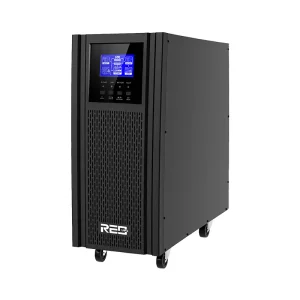
An Online UPS continuously converts incoming AC power to DC, and then back to clean AC. This means the load is always isolated from grid anomalies. With zero transfer time, Online UPS systems are essential for sensitive applications like mission-critical data servers, medical imaging machines, and complex automated control networks.
| Feature | Offline UPS | Online UPS |
|---|---|---|
| Transfer Time | 4ms to 8ms | 0ms (Zero) |
| Power Efficiency | Very High (~98%) | High (~92%-95%) |
| Harmonic Distortion | Passes through input | Corrected output |
| Relative Cost | Cost-Effective | Premium Investment |
We configure our UPS architectures to match the distinct operational requirements of the southern African market.
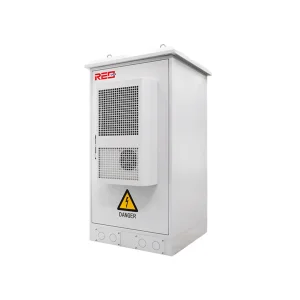
Uranium, diamond, and base metal mining operations in remote parts of Namibia require rugged backup systems. Our heavy-duty, low-frequency online UPS models feature built-in isolation transformers to protect sensitive PLC control terminals and environmental monitoring systems from voltage spikes caused by heavy machinery.
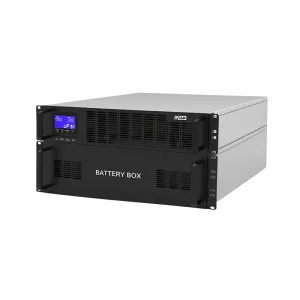
Namibia's vast geography relies on remote telecom towers and edge stations. By combining high-temperature lithium-ion battery configurations (48V LiFePO4) with our compact, rack-mounted UPS systems, we supply reliable backup power that operates smoothly even in isolated, hot desert environments.
For office spaces and shopping outlets in Windhoek and Swakopmund, our offline and line-interactive UPS systems provide a practical, cost-effective defense. They keep computers, security networks, and point-of-sale systems running smoothly through power outages and local grid transitions.
Explore our range of customizable power solutions built for medical, industrial, and high-density IT environments.
International procurement managers and engineering contractors look for key technical and operational indicators when selecting a UPS manufacturing partner. With energy costs rising globally, the focus has shifted toward high-efficiency systems that reduce operational overhead.
Modern procurement standards require strict compliance with international certifications. These include EN/IEC 62040 for safety and performance testing, and CE markings for electromagnetic compatibility. When selecting suppliers, check for advanced manufacturing capabilities such as Automated Optical Inspection (AOI) and computerized ATE validation testing. These tools ensure that every unit performs reliably under high stress before it leaves the factory.
In addition, the shift from traditional lead-acid batteries to lithium iron phosphate (LiFePO4) chemistry is accelerating. LiFePO4 batteries offer a longer lifecycle, faster charging, and perform better in high ambient temperatures, making them a smart long-term investment for infrastructure projects in challenging climates.
Find expert answers to common questions about selecting, deploying, and maintaining UPS equipment in sub-Saharan Africa.
Get in touch with our engineering team to discuss custom power backup designs, request technical specifications, or get a quotation for your project.
Send Inquiry Now REO UPS