Top 10 Single Phase UPS Systems for Global Buyers

Time:2026-10-14 Author:Sophia
0%

Choosing reliable backup power is rarely as simple as comparing battery capacity. Global buyers must examine voltage compatibility, frequency tolerance, runtime, efficiency, maintenance, and local service support. This guide, “Top 10 Single Phase UPS Systems for Global Buyers,” explores those practical differences without treating every model as universally suitable.

Patrick Donovan, a senior research analyst known for his work on data center power, has stated, “A UPS is not just a battery backup; it is a power protection system.” That principle matters in real installations. A small office may need clean power for routers, point-of-sale equipment, and workstations. A medical clinic may require stronger monitoring, controlled shutdowns, and dependable battery replacement. Different risks demand different designs.

Look beyond glossy specifications.

The selected Single Phase Ups Systems are compared through usable runtime, output waveform, transfer performance, load capacity, battery options, and management features. Regional factors also matter. A unit designed for 120-volt networks may not fit a 230-volt environment without careful verification. Plug types, warranty terms, shipping conditions, and technician availability can change the buying decision.

Some ratings appear impressive. They may disappoint under real loads. Battery aging, heat, poor ventilation, and expansion plans deserve honest attention. No shortlist can replace an electrical assessment. Still, these ten systems provide a practical starting point for buyers seeking safer, more resilient power protection across different markets.
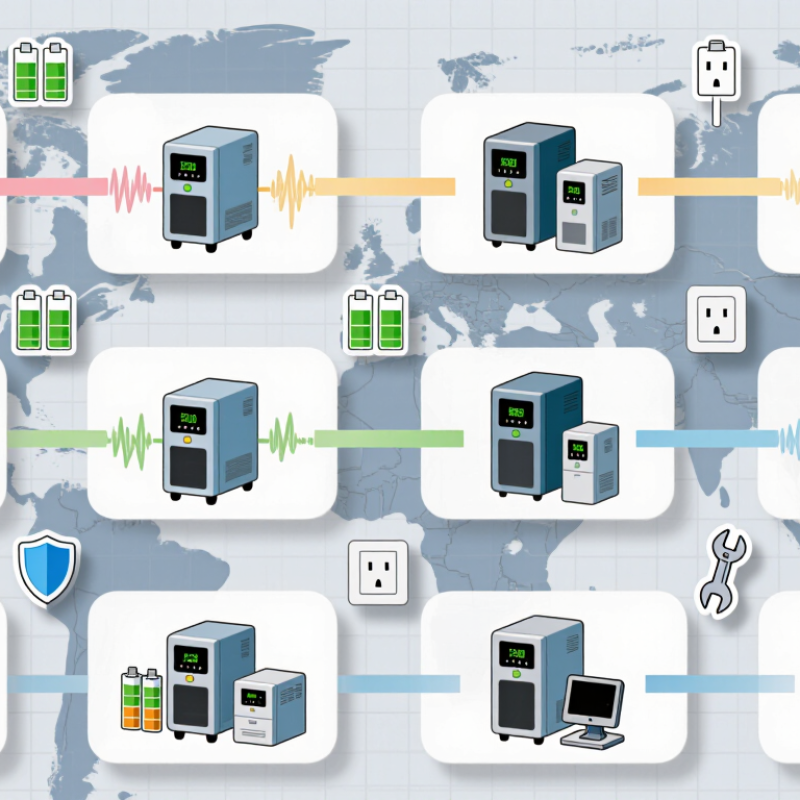
Top 10 Single Phase UPS Systems for Global Buyers

Single-Phase UPS Systems: Purpose, Design, and Operating Principles

Single-phase UPS systems protect sensitive equipment from power interruptions, voltage dips, surges, and unstable frequency. They are common in home offices, small server rooms, clinics, retail counters, and control cabinets. A UPS does more than provide backup time. It helps keep computers, network devices, and monitoring equipment operating without sudden shutdowns.

Its design usually includes a rectifier, battery charger, inverter, static bypass, and control board. During normal operation, incoming AC power charges the battery and supplies the connected load. When the utility supply fails, the inverter converts stored DC energy into stable AC power. The transfer can happen within milliseconds, depending on the operating topology. Online systems continuously regenerate power, while standby and line-interactive designs switch or regulate power differently. Each approach involves trade-offs.

Battery condition matters greatly. Heat, frequent discharge, dust, and poor ventilation can reduce runtime faster than expected. A technician should measure load demand, starting currents, battery age, and available expansion space before selecting capacity. Oversizing may increase cost, but undersizing can trigger overload alarms during routine use. No design is perfect. Even a carefully specified UPS can perform poorly if its batteries are ignored or its outlets are overloaded. Regular inspections, clear labeling, and practical runtime testing often reveal problems that product specifications cannot.

Top 10 Single-Phase UPS Capacity Classes

This chart presents ten commonly available single-phase UPS output-capacity classes, from compact 600 VA units for networking equipment to 15 kVA systems for small server rooms and critical facilities. A UPS converts incoming AC power to DC and back to regulated AC, while its battery supplies power during an outage.

The values represent standard market capacity classes rather than rankings or specific manufacturers. Actual availability, output voltage, runtime, and installation requirements vary by model and region.

Key Features Global Buyers Should Compare in Single-Phase UPS Systems

Top 10 Single Phase UPS Systems for Global Buyers

Global buyers should compare single-phase UPS systems by load type, not only rated capacity. A 3 kVA unit may support office computers, network switches, and small medical equipment differently. Check the real watt rating, power factor, and expected peak demand. Extra capacity matters. It reduces heat and leaves room for expansion.

Online double-conversion UPS systems provide stable output for sensitive equipment, while line-interactive models usually cost less and use less energy. Compare efficiency at 25%, 50%, and 100% load. Low-load efficiency is often overlooked. Battery chemistry, recharge time, and replaceable battery design also affect ownership costs. Runtime charts deserve careful checking because actual results change with battery age, temperature, and load behavior.

Input voltage and frequency ranges should match the installation country. Confirm socket standards, bypass functions, surge protection, and generator compatibility before purchasing. Remote monitoring through network interfaces can reveal overloads, battery faults, and rising temperatures early. Look for clear alarms and usable event logs, not impressive software descriptions. Safety approvals and electromagnetic compatibility documentation should come from recognized testing bodies. Service access is equally important; a heavy battery cabinet in a narrow equipment room can become a practical problem. In my experience, published runtime figures are helpful but rarely perfect. Buyers should request test conditions, support response times, warranty limits, and local spare-parts availability in writing.

Top 10 Single-Phase UPS Systems for Different Applications

Top 10 Single-Phase UPS Systems for Different Applications

Single-phase UPS systems suit smaller loads, distributed equipment, and locations with limited electrical capacity. The IEA’s Electricity 2024 report estimates that data centers used about 460 TWh globally in 2022. Demand could exceed 1,000 TWh by 2026. Reliable power protection is becoming less optional.

The ten practical categories include home-office UPS units, gaming systems, retail point-of-sale protection, network and telecom edge units, medical workstations, laboratory instruments, industrial controllers, security equipment, small servers, and classroom technology.

Home offices usually need line-interactive designs with USB monitoring. Medical and laboratory equipment may require online double-conversion systems, low transfer time, and documented output quality. Small servers need longer runtime, replaceable batteries, and network alerts. Retail systems benefit from compact units that protect transactions during brief voltage drops.

Choose by load profile, not appearance. Check real power in watts, starting current, battery autonomy, outlet type, and local electrical standards.

IEC 62040-3 defines UPS performance classifications, while IEC 62040-1 addresses safety requirements. The Uptime Institute’s annual outage research repeatedly identifies power problems as a major cause of service disruption. That evidence supports careful testing and maintenance.

A neat ranking can mislead. A low-cost unit may work well beside a router but fail under motor-driven loads. Runtime estimates also vary with battery age, temperature, and load. Reality is messier. Buyers should request test records, warranty terms, alarm behavior, and replacement-battery availability before selection.

International Standards, Voltage Options, and Installation Requirements

Top 10 Single Phase UPS Systems for Global Buyers

International buyers should evaluate compliance before comparing capacity or price. IEC 62040 defines important UPS safety and performance requirements. However, local electrical codes still control installation. A unit accepted in one market may require different certification elsewhere. Check national approvals, electromagnetic compatibility limits, and documentation before ordering. Standards matter.

Voltage selection must match the facility, not just the equipment label. Common options include 120 V, 220–240 V, and 230 V output. Input frequency may be 50 or 60 Hz. Some systems accept a wide input range, which helps in unstable grids. Confirm plug types, phase configuration, neutral arrangement, and bypass voltage. A small mismatch can stop critical equipment from starting.

Installation needs practical planning. Leave clearance around the UPS for airflow and service access. Use correctly rated breakers, protective grounding, and cables sized for continuous load. Battery cabinets may require ventilation, temperature control, and restricted access. Keep the system away from water, dust, and direct heat. Load calculations should include startup current and future expansion. Oversizing feels safe, but it can reduce efficiency and raise cost. I have seen specifications look perfect while the site wiring remained unsuitable. An authorized electrician should verify the final connection against IEC 60364 and applicable local rules.

How to Select, Deploy, and Maintain a Single-Phase UPS System

Selecting a single-phase UPS requires more than comparing the top ten models by price. Start with the real load, not the equipment label. Record active power in watts, apparent power in VA, startup current, and future expansion. A practical design usually keeps the UPS below 80% of its rated capacity. This leaves room for battery aging and unexpected loads. Check the input voltage, output waveform, transfer time, and available bypass options. Runtime should match the shutdown plan, not an unrealistic promise of several hours.

Deployment begins with a clean site survey. Measure the cabinet space, airflow, ambient temperature, and distance to protected devices. Keep batteries away from heat sources. Label every cable before energizing the system. Test normal operation, battery mode, overload response, alarms, and controlled shutdown. A small load bank test can reveal problems that a quick power-on check misses. Do not assume factory settings fit every server or network device.

Maintenance is usually less dramatic, but more important. Review event logs monthly and inspect connections for heat damage or looseness. Test batteries according to the manufacturer’s procedure, while avoiding unnecessary deep discharges. Replace aging batteries as a planned task, not during an outage. No sizing worksheet is perfect. A forgotten printer or new switch can change the load profile quickly. Recheck measurements after deployment, because real usage often differs from the original estimate. Keep service records, battery dates, test results, and corrective actions in one accessible file.

FAQS

What equipment is suitable for a single-phase UPS?

It suits home offices, routers, point-of-sale terminals, small servers, and classroom devices. It handles smaller, distributed loads well. Not every load fits.

How should UPS capacity be selected?

Check real power in watts, starting current, future expansion, and battery runtime. Do not choose by appearance alone. Bigger is not always better.

Which UPS design suits a home office?

A line-interactive system with USB monitoring often works well. It can protect computers, monitors, and networking equipment during brief voltage changes. Keep cables tidy.

When is online double-conversion protection useful?

Medical workstations and laboratory instruments may need stable output and very short transfer time. Confirm the required power quality before purchasing. Assumptions can fail.

What should small-server buyers check?

Look for replaceable batteries, network alerts, and adequate runtime. Measure the server load during normal activity. Battery estimates are not promises.

Which voltage details require confirmation?

Match the UPS to the facility voltage, frequency, plug type, and phase arrangement. Common outputs include 120 V and 220–240 V. A small mismatch can prevent startup.

What installation conditions are important?

Leave airflow space around the unit and provide safe service access. Use correctly rated breakers, grounding, and properly sized cables. Keep water away.

How do temperature and battery age affect runtime?

Older batteries, high temperatures, and heavier loads usually reduce runtime. Test the system under realistic conditions. The label may look precise, but reality is messier.

What documents should be requested before purchase?

Request test records, warranty terms, alarm behavior, replacement-battery availability, and compliance documents. Check applicable electrical rules locally. Paperwork prevents some surprises.

Why can a low-cost UPS fail in practice?

It may protect a router but struggle with motor-driven equipment or high startup current. Site wiring can also remain unsuitable. The specification is only part of the answer.

Conclusion

Single Phase Ups Systems provide reliable backup power for homes, offices, laboratories, retail facilities, and other applications that rely on stable electricity. This article explains their purpose, internal design, and operating principles, including how batteries, inverters, rectifiers, bypass circuits, and monitoring functions work together to protect connected equipment from outages, voltage fluctuations, surges, and power interruptions. It also highlights the key factors global buyers should compare, such as capacity, runtime, efficiency, transfer time, waveform quality, scalability, battery type, communication features, noise level, and total operating cost.

The guide presents ten practical system categories suited to different use cases and examines international standards, regional voltage and frequency options, safety considerations, installation conditions, and required clearances. It concludes with a practical selection and deployment process, covering load assessment, environmental planning, commissioning, battery management, routine inspections, testing, and replacement planning. By evaluating technical performance, compliance, serviceability, and long-term reliability together, buyers can select a single-phase UPS solution that supports business continuity and protects sensitive equipment.


Sophia

Sophia

Sophia is a dedicated marketing professional with an exceptional depth of knowledge about her company's products and services. With a keen understanding of market trends and customer needs, she crafts insightful blog posts that not only inform but also engage readers, enriching the company’s online......