Choosing the best China Education Ups suppliers requires more than comparing prices and catalog specifications. Schools, universities, and training centers need stable power for computer rooms, smart classrooms, examination systems, network equipment, and campus security devices. A short outage can interrupt lessons, corrupt records, or stop an online examination.
David J. P. Thomson, a recognized power-quality specialist and author of UPS industry guidance, has emphasized, “The UPS is only one part of the power protection system.” This practical view matters when evaluating Chinese manufacturers. A dependable supplier should provide clear battery specifications, tested efficiency data, realistic backup-time curves, and documented protection features. Factory quality controls also deserve attention. Look for ISO-based processes, relevant CE or IEC compliance, traceable components, and test reports that match the supplied model.
Service can decide the purchase.
A capable Education Ups supplier should explain installation, battery replacement, remote monitoring, and emergency support in plain English. Ask for references from schools with similar electrical loads. A supplier that avoids load-testing questions may not be ready for critical educational environments. Warranty terms also require careful reading, especially for batteries, cooling systems, and overseas service response.
China offers many experienced UPS manufacturers, but quality is not uniform. Some suppliers communicate well before payment, then respond slowly after delivery. That possibility should be tested early. This guide will compare leading suppliers through product reliability, customization, certifications, delivery capability, technical support, and long-term operating value. No supplier is perfect. The strongest choice is the one that proves its claims under realistic campus conditions.
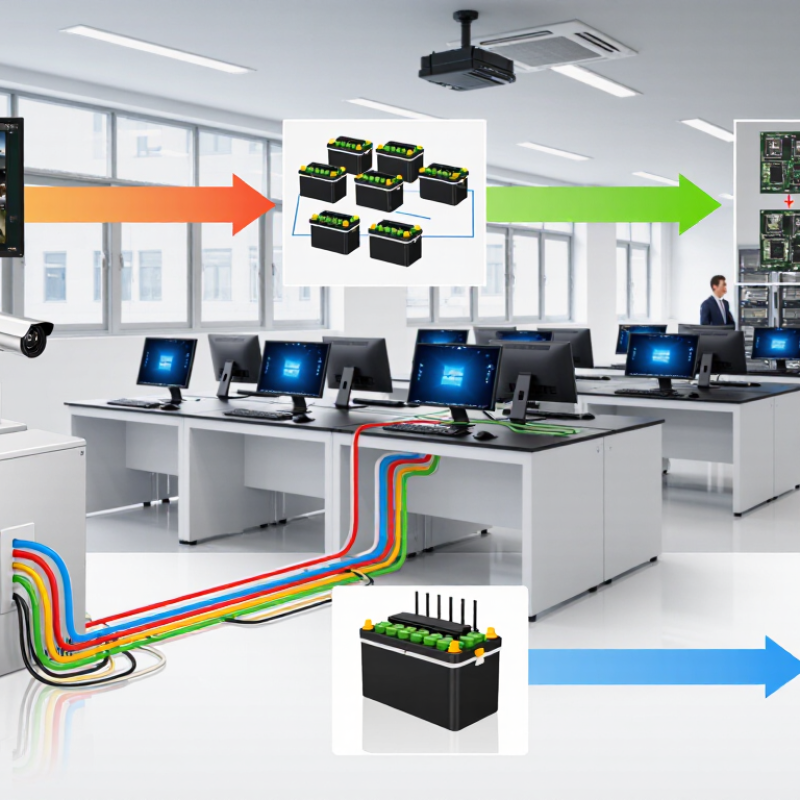
What Are the Best China Education UPS Suppliers?
China has become an important source of uninterruptible power supply systems for schools and universities. Its manufacturing base supports high-volume production, modular designs, and localized maintenance. According to China’s Ministry of Education, the country had more than 529,000 educational institutions in 2023. This scale creates demand for reliable protection in computer rooms, laboratories, examination centers, and campus networks.
Power quality matters. A short voltage dip can interrupt an online examination or corrupt research data. The Uptime Institute’s Global Data Center Survey 2023 reported that power-related incidents remain a leading cause of serious outages. Educational buyers should therefore assess battery autonomy, bypass performance, monitoring functions, and service response times. China-based suppliers often provide flexible configurations, from compact units for classroom servers to scalable three-phase systems for university data centers. Practical testing is essential, though. A polished specification sheet cannot replace a witnessed load test.
Energy efficiency also deserves attention. The International Energy Agency notes that global electricity demand from data centers and related digital infrastructure is increasing rapidly. Efficient UPS operation can reduce heat, battery stress, and long-term operating costs. Buyers should request verified efficiency curves, battery replacement procedures, cybersecurity documentation, and compliance certificates. Some procurement teams focus too heavily on purchase price. That can be a costly mistake. A lower-priced system may require more frequent battery changes or weaker local support. China’s supply advantage is real, but supplier evaluation still needs engineering evidence, transparent data, and careful site experience.
Online double-conversion systems provide continuous voltage regulation and no transfer delay during outages. They need good ventilation because they can produce more heat.
It can suit office computers, projectors, and small teaching networks. Automatic voltage regulation helps reduce battery use during minor fluctuations.
Modular systems can expand as campus demand grows. A technician may replace one power module quickly, but trained service support is essential.
Review real equipment loads, including printers, air conditioners, and laboratory instruments. Their startup demands can vary. Capacity alone is not enough.
Request load-test reports, efficiency curves, battery autonomy data, and alarm logs. Compare performance at 25%, 50%, and 100% loads. Numbers matter.
Match each certificate to the exact UPS model and its specifications. Check issue dates, testing details, and whether batteries and bypass cabinets are covered.
Ask about commissioning, remote diagnosis, firmware management, spare parts, and engineer response times. Request a sample service report with measured voltage and temperature.
Arrange a site survey and inspect cable routes, bypass switches, and alarm settings. A pilot installation can reveal problems that presentations miss. Test it onsite.
Battery aging and local maintenance skills can be overlooked, even by careful buyers. Ask for a battery-life estimate and clear replacement procedures.
China plays an important role in supplying UPS systems for schools, universities, and other educational institutions, offering a range of solutions for different facility sizes and backup-power needs. Choosing a suitable Education Ups supplier involves assessing product capacity, reliability, energy efficiency, customization options, manufacturing experience, and the supplier’s ability to provide clear technical information. Suppliers may include manufacturers, engineering-focused providers, and trading companies, each offering different levels of product control, project support, and purchasing flexibility.
Before making a purchase, compare product specifications, quality-control practices, relevant certifications, warranty terms, and the availability of installation guidance and after-sales support. Request detailed quotations and documentation, clarify delivery timelines, and discuss how the system will fit the institution’s equipment and operating requirements. A careful evaluation of both the UPS product and the supplier can help educational institutions make an informed investment and support dependable power for classrooms, laboratories, and essential campus operations.

 REO UPS