Top 10 Nobreak Rack Manufacturers for Global Buyers?

Time:2026-09-19 Author:Ethan
0%

Choosing a reliable Nobreak Rack manufacturer requires more than comparing prices or reading product brochures. Global buyers need stable power protection, efficient cooling, serviceable batteries, and clear technical documentation. A rack-mounted UPS may protect servers, network switches, storage systems, and security equipment during outages. However, poor sizing or weak after-sales support can create expensive downtime.

This guide examines ten Nobreak Rack manufacturers with practical buying criteria. It considers product capacity, battery design, monitoring systems, installation flexibility, certifications, warranty terms, and international service coverage. Attention is also given to operating environments, including data centers, factories, offices, hospitals, and telecommunications rooms. Real-world details matter. A noisy cooling fan, difficult battery replacement, or unclear alarm display can affect daily operations more than a low purchase price.

Reliable comparisons should use manufacturer specifications, technical manuals, customer experience, and independent verification where available. Claims can change by region, model, and production year. That limitation deserves attention. A respected brand may still offer unsuitable equipment for a specific voltage, load profile, or climate. Buyers should confirm local support, spare-part availability, delivery schedules, and compliance requirements before ordering. The ranking is therefore a practical starting point, not an absolute verdict. Power protection is highly application-specific. Careful evaluation remains essential.
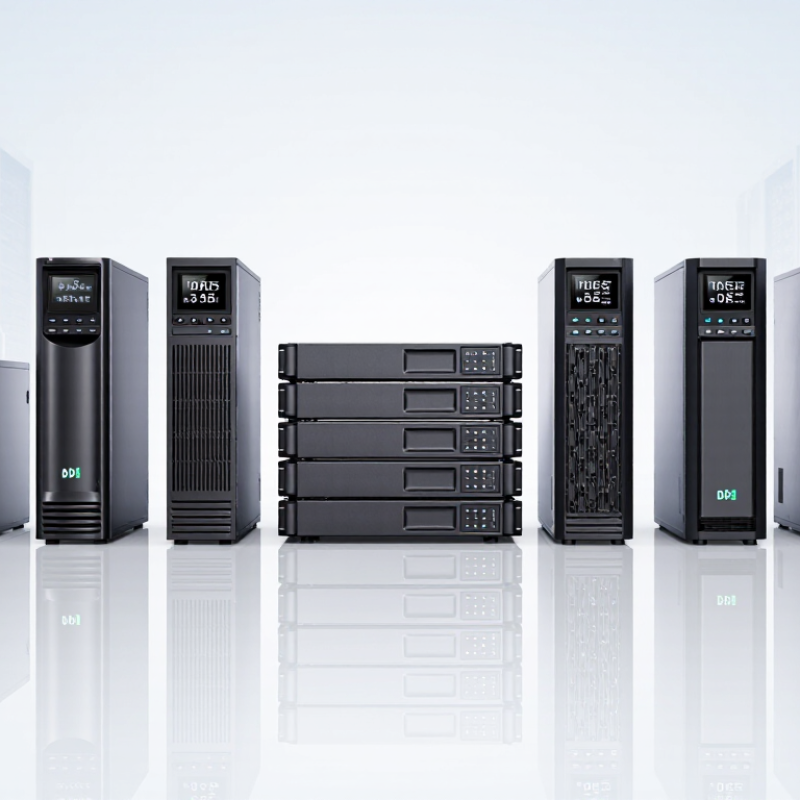
Top 10 Nobreak Rack Manufacturers for Global Buyers?

What Is a Rack-Mount UPS and How Does It Support Critical Equipment?

A rack-mount UPS is a battery-backed power system designed to fit inside a standard server cabinet. It protects servers, switches, storage units, and network appliances from outages, voltage drops, surges, and unstable frequency. During a failure, it transfers power to its batteries within milliseconds. Critical equipment stays online long enough for a generator to start or for controlled shutdown procedures to begin.

Field inspections often reveal that capacity is misunderstood. A unit should support the real wattage, not only the equipment’s listed power rating. Runtime also depends on battery age, temperature, load balance, and future expansion. Online double-conversion models usually provide stronger power conditioning, while line-interactive models may suit less sensitive installations.

Monitoring software can report battery health, overload warnings, and remaining runtime. This information helps technicians respond before a failure becomes serious.

Tips: Measure actual load with a power meter before selection. Leave expansion capacity, ideally 20–30 percent. Check rack depth, rail strength, airflow direction, outlet types, and maintenance access. Keep batteries in a controlled environment. Never block ventilation.

No installation is perfect. A larger UPS is not automatically safer if its batteries are poorly maintained or its heat cannot escape. Buyers should request test data, warranty terms, replacement-battery guidance, and local service procedures. Independent inspection and documented commissioning add reliability, especially when equipment operates across different regions.

How to Evaluate Rack UPS Manufacturers for International Purchasing

Top 10 Nobreak Rack Manufacturers for Global Buyers?

How to Evaluate Rack UPS Manufacturers for International Purchasing

Choosing a rack UPS manufacturer requires more than comparing prices and battery capacity. International buyers should examine operating experience, engineering depth, and after-sales reliability. Ask how many years the supplier has supported data centers, telecom rooms, and industrial sites. Request installation photos, test records, and customer references from similar climates.

Check the electrical details carefully. Confirm input voltage, frequency range, output waveform, transfer time, overload protection, and rack dimensions. A reliable manufacturer should provide clear datasheets and independent safety certifications. Review battery options, expected service life, replacement procedures, and shipping conditions. Ask whether the unit passed factory load testing before dispatch. Small gaps matter.

Look beyond the product itself. Evaluate remote monitoring, firmware updates, spare-parts availability, and technical support across time zones. A dependable supplier should explain warranty limits in plain language. Response times should be written into the contract, not promised casually. Factory audits can reveal cable quality, assembly discipline, and storage conditions. Visit if possible.

Do not trust polished brochures alone. They can hide practical weaknesses. Compare total ownership cost, including freight, customs documentation, commissioning, batteries, and disposal planning. A low purchase price may create expensive downtime later. My own evaluation would include a trial order, though this adds time and cost. That hesitation is reasonable. A perfect scorecard is unrealistic, but transparent evidence makes the decision safer.

Top 10 Nobreak Rack Manufacturers for Global Buyers

How to Evaluate Rack UPS Manufacturers for International Purchasing

The chart presents a practical procurement-weighting framework for comparing rack UPS suppliers internationally. Safety and regulatory compliance should receive the highest priority, followed by total cost of ownership, energy efficiency, battery performance, after-sales support, and delivery capability. Buyers should verify each criterion through technical documents, test reports, factory audits, service agreements, and total-cost calculations.

Key Features, Standards, and Services to Compare Across Brands

Top 10 Nobreak Rack Manufacturers for Global Buyers?

When comparing rack nobreak manufacturers, buyers should examine more than runtime and price. Uptime Institute’s 2024 Annual Outage Analysis reported that 54% of surveyed organizations experienced an outage during the previous three years. Power protection deserves careful testing.

Check compliance with IEC 62040-1 for safety, IEC 62040-2 for electromagnetic compatibility, and IEC 62040-3 for performance classification. In North American projects, UL 1778 certification may also matter. Request test reports, not only printed claims. Compare double-conversion efficiency, transfer time, battery chemistry, recharge speed, bypass design, and load-management options. A neat specification sheet can still mislead.

Service quality often separates reliable systems from expensive interruptions. Ask whether technicians provide commissioning, thermal scans, battery impedance testing, firmware control, and documented recovery procedures. Clarify response times, local spare-part stock, warranty exclusions, and support coverage across different time zones. The Uptime Institute also identifies human error and procedural weaknesses as recurring contributors to downtime. Training matters.

Review the whole lifecycle.

Schneider Electric’s 2024 Data Center Dynamics research estimated that data-center power demand could more than double by 2030. This increases the value of scalable architectures, measurable efficiency, and battery monitoring. Yet efficiency figures may depend on load conditions. Buyers should test at realistic loads, temperatures, and aging stages, rather than trusting one laboratory result.

Top 10 Nobreak Rack Manufacturers for Global Buyers? - Key Features, Standards, and Services to Compare Across Brands

Anonymous buyer-comparison matrix based on commonly specified rack-mounted UPS requirements and internationally recognized standards.

Evaluation Profile Typical Application UPS Topology Rack Format Common Power Range Output Power Factor Online Efficiency Battery Options Monitoring & Connectivity Standards to Verify Service Points to Compare
Profile 01 Small server room Online double-conversion 1U–3U rack 1–3 kVA 0.8–1.0 Up to 96–98% Internal VRLA; external battery cabinet USB/RS-232; optional SNMP card IEC 62040-1, IEC 62040-2, IEC 62040-3; RoHS; CE or local equivalent Remote commissioning, battery replacement, firmware support
Profile 02 Edge computing cabinet Online double-conversion 2U–6U rack 2–10 kVA 0.9–1.0 Up to 97–98% VRLA or lithium-ion; hot-swappable modules on selected models SNMP, Modbus, dry contacts, environmental sensors IEC 62040 series; EMC requirements; RoHS; CE, UKCA, UL or regional approval Temperature derating data, onsite response, spare-part availability
Profile 03 Network and telecom equipment Line-interactive or online 1U–2U rack 750 VA–3 kVA 0.8–1.0 Up to 95–98% Internal battery; extended-runtime packs USB, serial, SNMP, web interface IEC 62040-1 and IEC 62040-2; surge and EMC testing; RoHS Fast replacement program, battery logistics, multilingual manuals
Profile 04 Data-center rack row Online double-conversion 2U–4U rack 5–10 kVA 0.9–1.0 Up to 97–99% VRLA or lithium-ion; scalable runtime SNMP, Modbus TCP/RTU, relay contacts, DCIM integration IEC 62040-3 performance classification; IEC 62040-2 EMC; UL 1778 where applicable Parallel operation, predictive battery monitoring, SLA options
Profile 05 Industrial control network Online double-conversion 2U–6U rack 3–10 kVA 0.8–1.0 Up to 95–98% VRLA; high-temperature battery options Dry contacts, Modbus, SNMP, generator compatibility IEC 62040 series; IEC 61000 EMC family; ingress and seismic requirements where specified Industrial commissioning, extended warranty, critical-spares plan
Profile 06 Healthcare IT equipment Online double-conversion 2U–4U rack 1–10 kVA 0.9–1.0 Up to 96–98% VRLA or lithium-ion, subject to site approval SNMP, alarms, event logs, remote shutdown IEC 62040; applicable medical electrical and EMC requirements must be confirmed separately Documented maintenance procedures, trained technicians, audit support
Profile 07 Retail and branch IT Line-interactive or online 1U–2U rack 750 VA–3 kVA 0.8–1.0 Up to 95–98% Internal VRLA; user-replaceable battery on selected designs USB, network card, centralized fleet monitoring IEC 62040; RoHS; regional safety and EMC certification Standardized installation kits, depot repair, clear replacement intervals
Profile 08 Cloud and colocation facility Online double-conversion 2U–6U rack or modular frame 5–20 kVA 0.9–1.0 Up to 97–99% Lithium-ion or VRLA; scalable battery strings SNMP, Modbus, REST/API or DCIM integration IEC 62040-1/2/3; UL 1778 or equivalent; ISO 9001 manufacturing system preferred 24/7 monitoring, preventive maintenance, capacity planning, SLA reporting
Profile 09 Remote and unmanned site Online double-conversion 2U–4U rack 1–6 kVA 0.8–1.0 Up to 95–98% VRLA; temperature-compensated charging 4G/5G gateway, SNMP, dry contacts, environmental monitoring IEC 62040; EMC and surge immunity; regional radio approvals for communication devices Remote diagnostics, low-touch installation, logistics to difficult locations
Profile 10 High-density GPU or AI rack High-efficiency online double-conversion 3U–6U rack or external cabinet 6–20 kVA 0.9–1.0 Up to 97–99% Lithium-ion or high-capacity VRLA; external runtime cabinets SNMP, Modbus, API, power-quality and thermal alarms IEC 62040-3; IEC 61000 EMC family; UL 1778 or applicable national equivalent Load-bank testing, thermal assessment, parallel redundancy, expansion roadmap

Buyer Verification Notes

The power, efficiency, rack-size, and battery figures above represent common market ranges rather than claims made by any specific manufacturer. Confirm the exact model datasheet, electrical input and output configuration, operating temperature, derating curve, battery autonomy, certification scope, warranty terms, service response time, and local compliance requirements before purchase.

Top 10 Rack UPS Manufacturers for Global Buyers

Global buyers evaluating the top 10 rack UPS manufacturers should look beyond output capacity. Rack-mounted systems must protect servers from voltage dips, surges, and short interruptions. They should also support hot-swappable batteries, network monitoring, maintenance bypass, and clear alarm reporting. A compact 10 kVA unit can serve a small edge room, while dense AI racks may require modular expansion and stronger thermal management.

Uptime Institute’s 2024 Global Data Center Survey reported that 54% of respondents placed their latest outage cost below $100,000. About one-fifth reported costs above $1 million. That gap makes reliability testing essential. Buyers should request efficiency curves, load-step results, battery autonomy at realistic temperatures, and evidence from comparable installations. Marketing claims are not enough.

MarketsandMarkets’ 2024 data center UPS research identifies rising digital infrastructure investment as a major growth driver. It also highlights modularity, remote management, and energy efficiency. Manufacturers serving global customers should provide regional service teams, compatible voltage options, spare-parts access, and documented compliance with local electrical standards. Lithium-ion batteries can reduce footprint and maintenance, but they require careful fire-safety planning. Traditional lead-acid systems remain practical in many facilities. A ranking can still mislead. The best supplier on paper may perform poorly where service coverage is weak. Experienced buyers should compare five-year ownership costs, not only the purchase price.

How to Choose the Right Rack UPS Supplier for Your Facility

Choosing among the top 10 rack UPS manufacturers requires more than comparing price and battery capacity. Your facility’s load profile should guide the decision. Measure current demand, future expansion, power factor, and available rack space before requesting quotations.

Ask each supplier for verified efficiency curves, overload behavior, transfer time, and maintenance-bypass details. A reliable rack UPS should protect servers during voltage dips, outages, and unstable generator operation. Check whether the unit supports lithium-ion or lead-acid batteries, hot-swappable modules, and remote monitoring. Clear alarms matter during a night shift.

Look closely at service capability. Can technicians respond locally? Are replacement batteries available for several years? Request test reports, warranty terms, installation guidance, and references from facilities with similar loads. Certifications should match your region and application. A polished sales presentation proves little.

Site conditions are easy to underestimate.

Consider heat, dust, humidity, clearance, and cable routing. Ask manufacturers to perform a load assessment instead of offering a standard model immediately. One practical warning remains: the cheapest UPS may create higher costs through battery replacement, downtime, or difficult maintenance. I have seen specifications look complete while emergency support was vague. That gap deserves uncomfortable questions before signing a purchase agreement.

FAQS

What should buyers assess before choosing a rack UPS?

Measure current load, future growth, power factor, and available rack space. A 10 kVA unit may suit a small edge room. Dense computing racks may need modular expansion.

Which protection features matter most?

Look for protection against voltage dips, surges, outages, and unstable generator operation. Check transfer time and overload behavior. Short interruptions still matter.

Why are efficiency curves important?

Efficiency changes with load, so one headline percentage can mislead. Request verified curves across realistic operating levels. Energy losses become heat inside the room.

Should facilities choose lithium-ion or lead-acid batteries?

Lithium-ion batteries save space and may reduce maintenance. They require careful fire-safety planning. Lead-acid remains practical for many facilities.

What remote-management features should a rack UPS include?

Choose network monitoring, clear alarms, and useful event records. Night-shift staff should quickly see battery status and overload warnings. Confusing alarms create avoidable delays.

How can buyers judge service support?

Ask whether local technicians can respond quickly. Confirm spare-parts and replacement-battery availability for several years. A polished presentation proves little.

Which site conditions can affect UPS performance?

Review heat, dust, humidity, clearance, and cable routing. A hot, dusty rack may age batteries faster. Site conditions are easy to underestimate.

How should buyers compare total costs?

Compare five-year ownership costs, not only purchase prices. Include batteries, maintenance, energy use, installation, and possible downtime. The cheapest unit may cost more later.

What evidence should a supplier provide?

Request load-step results, autonomy data at realistic temperatures, warranty terms, and installation guidance. References from similar facilities are valuable. Marketing claims are not enough.

Conclusion

This guide explains how a Nobreak Rack, also known as a rack-mount UPS, protects servers, networking devices, storage systems, and other critical equipment from power interruptions, voltage fluctuations, and electrical disturbances. It outlines the main factors international buyers should consider when evaluating rack UPS manufacturers, including capacity, runtime, scalability, battery management, monitoring functions, installation flexibility, energy efficiency, product quality, certifications, warranty coverage, technical support, and delivery capabilities.

The article also compares the key features and services that distinguish reliable suppliers, while presenting a practical overview of ten manufacturer categories suitable for global purchasing without focusing on specific brand names. Finally, it provides a step-by-step approach to selecting the right rack UPS supplier based on facility size, load requirements, operating environment, maintenance resources, compliance expectations, budget, and long-term expansion plans. This helps buyers make a confident decision and build a more resilient power protection strategy.


Ethan

Ethan

Ethan is a seasoned marketing professional with a deep expertise in our company's innovative product line. With a passion for sharing knowledge and insights, he takes the lead in regularly updating our corporate blog, where he explores industry trends, product features, and effective marketing......