Choosing the best Lithium Ion Home UPS can be challenging. With various brands and specifications, it's crucial to know what suits your home needs. Industry expert Dr. Sarah Johnson, a renewable energy specialist, emphasizes, "Understanding your power requirements is key to selecting the right UPS."
Lithium Ion Home UPS systems offer reliable backup power for homes. They are efficient, compact, and faster in charging compared to traditional options. However, many buyers overlook important factors like battery capacity, inverter quality, and built-in safety features. Each household has unique energy demands, and it's essential to assess how much power you typically consume.
Some may rush into decisions, drawn by appealing marketing. But taking the time to evaluate your specific requirements can prevent future regrets. Consider how many devices you need to connect during outages. Each home is different, and an informed choice leads to dependable backup power. Investing in the right Lithium Ion Home UPS not only ensures continuity but also promotes energy efficiency.
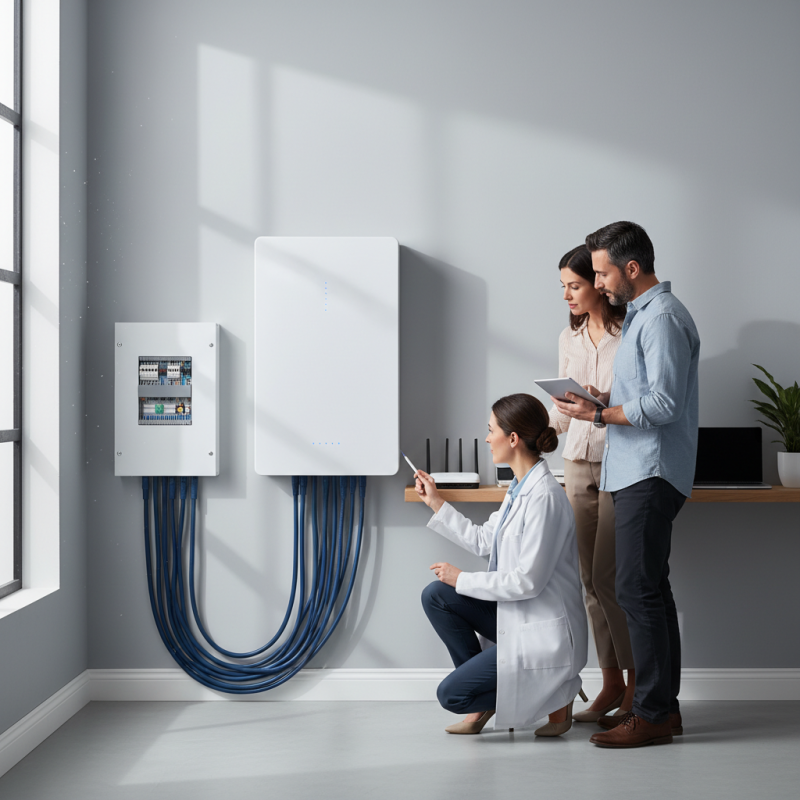
Understanding Lithium Ion Home UPS Technology
Lithium-ion technology has revolutionized energy storage, particularly for home uninterruptible power supplies (UPS). This type of UPS offers efficient, lightweight, and long-lasting power solutions. According to an industry report, lithium-ion batteries can achieve an impressive cycle life of up to 5,000 cycles. This contrasts sharply with traditional lead-acid batteries, which typically offer only 500 to 1,000 cycles.
Understanding how lithium-ion technology functions is critical in selecting the best home UPS. These batteries store energy electrochemically, allowing for quick energy release and recharge. They generally charge faster than lead-acid batteries, which is essential during power outages. Moreover, lithium-ion batteries maintain their capacity over many charge cycles, with a retention rate of up to 80% even after extended use. This reliability can be pivotal for household energy backup.
However, potential buyers should reflect on the initial costs. Lithium-ion UPS units can be more expensive upfront. For many, the long-term savings in maintenance and battery replacements may justify this investment. Evaluating individual energy needs and budgets is essential. Prospective users must assess space requirements; these systems can be compact, but installation may need careful planning. Understanding these factors will help homeowners make informed decisions on their energy reliability.
Factors to Consider When Choosing a Home UPS
Choosing the right lithium-ion home UPS requires careful consideration. Start by assessing your power requirements. Calculate the total wattage of devices you want to protect. A study from the National Renewable Energy Laboratory indicates that homes usually require between 1,000 to 5,000 watts to cover essential appliances. This data serves as a baseline for your search.
Another key factor is battery capacity. Look for UPS systems measured in amp-hours (Ah). Higher capacity batteries can provide longer backup times. For instance, a 100Ah battery may support a 500-watt load for about 10 hours. This is crucial during outages when power is vital.
Tips to consider:
1. Check inverter efficiency. A 90% efficiency means less wasted energy and longer battery life.
2. Consider product reviews and user experiences. Real-world insights can unveil strengths and weaknesses.
3. Don’t overlook warranty terms. A longer warranty indicates manufacturer confidence in their product.
While these factors guide your choice, no system is perfect. Variability in energy consumption and environmental conditions can impact performance. Reflect on your specific needs and habits to maximize investment in a home UPS. Always choose a device that aligns well with both your current demands and potential future requirements.
How to Choose the Best Lithium Ion Home UPS for Your Needs?
| Factor |
Details/Considerations |
| Power Capacity |
Choose a UPS that can handle your total wattage requirements to power essential devices. |
| Run Time |
Consider how long you need your devices to run during an outage; look for options with extended batteries if needed. |
| Form Factor |
Determine whether you need a tower or rack-mounted UPS based on your available space and installation preferences. |
| Total Harmonic Distortion (THD) |
Opt for UPS with low THD to protect sensitive electronics from power fluctuations. |
| Number of Outlets |
Ensure the UPS has enough outlets for all devices you intend to connect, along with some room for expansion. |
| Battery Type |
Lithium-ion batteries are preferred for longer life and lighter weight compared to traditional lead-acid batteries. |
| Management Features |
Look for monitoring software, mobile app support, and smart management capabilities for ease of use. |
| Cost |
Balance your budget with the features you need; consider total cost of ownership, including battery replacement. |
Assessing Your Power Needs and Backup Duration
Assessing your power needs is crucial when choosing a lithium-ion home UPS. Think about the appliances you rely on. Refrigerators, computers, and lights often top the list. Each device consumes a different amount of power. For example, a refrigerator may use about 100-800 watts. In contrast, a typical laptop consumes only 50-100 watts.
Backup duration can also vary substantially. Consider how long you may need power during an outage. Do you expect short interruptions, or is prolonged support necessary? Depending on your needs, calculate the required battery capacity. This can be tricky, especially with fluctuating power demands.
To get an accurate estimate, add up the wattage of all critical devices. Multiply this total by the number of hours you wish to maintain power. This figure gives you a baseline for the UPS capacity needed. Remember, it's best to allow for a safety margin. Real-life usage often brings surprises, and underestimating can lead to frustration. Keep these matters in mind for a better-informed choice.
Power Needs and Backup Duration Assessment
Comparing Capacity, Inverter Types, and Features
When selecting a Lithium Ion Home UPS, capacity is critical. Capacity is measured in kilowatt-hours (kWh). It defines how long your devices can run. For instance, a 2 kWh unit can power devices drawing 1 kW for approximately two hours. Industry reports suggest that a range of 2-10 kWh is optimal for residential use. Choose based on your daily energy consumption.
Inverter type also matters. There are primarily two types: pure sine wave and modified sine wave. Pure sine wave inverters mimic grid power, ensuring compatibility with all devices. Modified sine wave inverters are cheaper, but they may cause problems with sensitive electronics. Data shows that nearly 40% of users face issues due to inverter type misalignment with their devices.
Tip: Always assess your essential appliances and their wattage. This ensures your UPS can handle the load.
Features matter too. Look for units with automatic voltage regulation (AVR) and fast charging capabilities. Often, there are additional benefits like Wi-Fi connectivity for remote monitoring. Some units may have longer lifespans, but the average lifespan of Lithium-ion batteries is about 10 years. Consider how you can maintain your UPS for longevity.
Tip: Regularly check the battery health and cycle frequency to avoid unexpected failures.
Evaluating Brand Reputation and Customer Support Options
When selecting a lithium-ion home UPS, brand reputation plays a crucial role. Researching a company’s history can provide insight into its reliability. Look for manufacturers with years of experience. Longevity often indicates a commitment to quality. Reliable brands frequently invest in customer service and product innovation.
Customer support options are equally important. A strong support system ensures you have access to assistance when needed. Check if they offer online resources, call centers, or in-person help. Read reviews discussing support experiences from other users. These can highlight the responsiveness and effectiveness of service teams. Remember, a trusted brand might not always mean perfect service. Some consumers report delays in responses or unsatisfactory resolutions.
Evaluating these factors helps in making an informed decision. It can be tempting to just choose the most well-known brand. However, lesser-known brands might offer better support and performance. Always weigh reputation against individual needs. Trust your instincts while keeping an open mind to new options.
Conclusion
Choosing the best Lithium Ion Home UPS requires a thorough understanding of the technology, functionalities, and individual power needs. Firstly, it is essential to assess your specific power requirements and the desired duration of backup during outages. This assessment will guide you in selecting a unit with adequate capacity and appropriate inverter types.
Moreover, when comparing Lithium Ion Home UPS options, factors such as additional features, reliability, and the manufacturer's reputation should also be considered. Ensuring good customer support can significantly enhance your ownership experience and address any potential issues you may encounter. By carefully evaluating these criteria, you can confidently choose a Lithium Ion Home UPS that best fits your needs.

 REO UPS