5 Best Lithium Ion Home UPS for Global Buyers?

Time:2026-10-04 Author:Madeline
0%

Reliable backup power is no longer limited to server rooms. For households, a Lithium Ion Home Ups can keep lights, routers, medical equipment, and workstations running during sudden outages. Its compact cabinet may sit beside a desk, yet its performance depends on much more than battery capacity.

Energy-storage pioneer Dr. M. Stanley Whittingham once said, “Lithium batteries are a way of storing energy, not generating it.” That distinction matters. A UPS only delivers useful protection when its battery, inverter, charging system, and control software work together. This guide examines five leading Lithium Ion Home Ups options for global buyers, considering runtime, transfer speed, thermal protection, noise, warranty coverage, and regional service support.

Real-world details can change the decision. A 1,500 VA unit may support a modem, monitor, and small refrigerator, but not every appliance at once. A quiet fan matters in a bedroom. So does a replaceable battery. Buyers should also check voltage compatibility, socket design, certification records, and performance in hot or humid rooms.

Specs can mislead.

One weakness remains easy to overlook: advertised runtime often assumes a lighter load than a real home uses. Therefore, this comparison treats manufacturer claims carefully and focuses on practical operating conditions. It also recognizes an uncomfortable truth: the most expensive model is not automatically the safest or most suitable. A dependable choice balances verified protection, usable capacity, repair access, and honest long-term ownership costs.
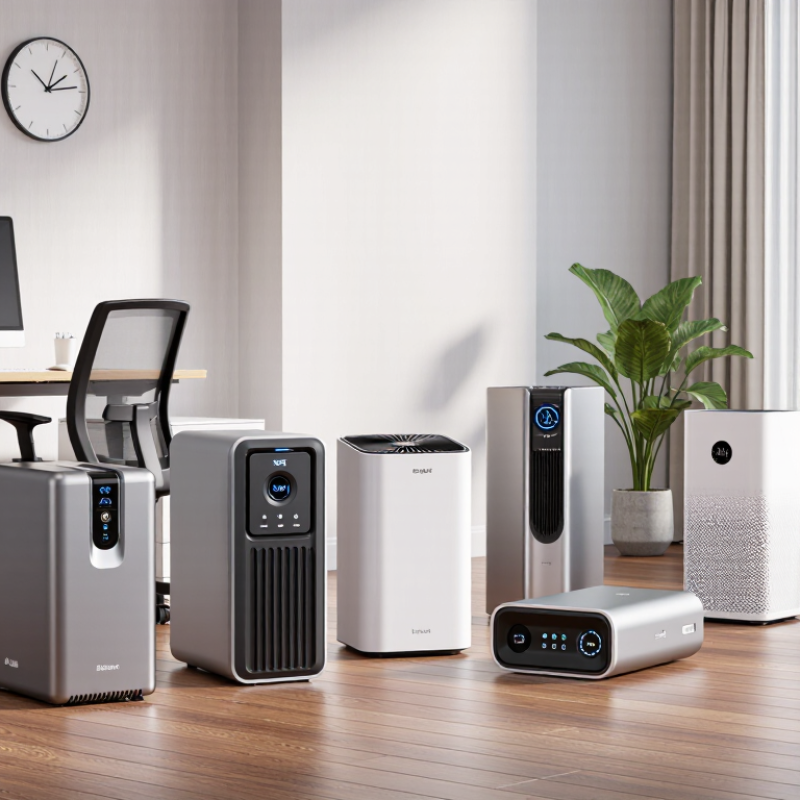
5 Best Lithium Ion Home UPS for Global Buyers?

How Lithium-Ion Home UPS Systems Work: VA, Watts, Runtime, and Topology

Lithium-ion home UPS systems store energy in rechargeable cells managed by a battery management system. The system monitors voltage, temperature, and cell balance. That protection matters in a warm utility closet. Lithium batteries usually offer longer service life and lower weight than lead-acid batteries, but they still need suitable ventilation and installation.

VA measures apparent power, while watts measure usable electrical power. A UPS rated at 1,500 VA may support only 900 watts. Check both figures before connecting a desktop computer, router, monitor, or pump. Add their running wattage, then allow extra capacity for startup surges. A practical target is 20 to 30 percent headroom. My first estimate is often too optimistic. That mistake matters.

Runtime depends on battery watt-hours, load, conversion efficiency, temperature, and battery age. A rough calculation is battery voltage multiplied by amp-hours, then multiplied by efficiency, divided by load watts. Actual results vary. A 1,000-watt load drains energy much faster than a 100-watt network setup. Topology also affects protection. Standby models switch over during outages. Line-interactive units regulate moderate voltage changes. Online double-conversion systems continuously rebuild clean power, making them useful for sensitive equipment, though they may cost more and consume additional energy. Check transfer time, charging limits, noise, and local electrical requirements before purchase.

Five Leading Home UPS Options Compared by 90–95% Efficiency and Runtime

5 Best Lithium Ion Home UPS for Global Buyers?

Five leading home UPS options deserve comparison by real efficiency and runtime, not advertising alone. The U.S. Department of Energy’s Energy Storage Grand Challenge Roadmap reports lithium-ion systems commonly achieving 85–95% round-trip efficiency. ENERGY STAR UPS testing also varies by load level. A 95% rating may fall at very light loads.

A compact line-interactive UPS usually delivers about 90–93% efficiency. It suits a router, monitor, or small workstation. A pure-sine 1–2 kVA unit can reach roughly 92–95%, protecting sensitive electronics more consistently. A 1–2 kWh lithium battery system may run a 100-watt network setup for approximately 8–17 hours, after conversion losses. Check the usable capacity.

Solar-ready hybrid UPS models often operate near 90–94% efficiency. They fit homes with panels, but extra conversion stages can reduce runtime. Modular 2–5 kWh systems may approach 94–95% efficiency and support longer outages. They cost more and require careful ventilation and installation. IEC 62040-3 emphasizes performance testing under defined operating conditions, not one universal household scenario. I would not trust the box rating alone. Cable length, battery temperature, standby consumption, and aging can change the result. A practical test at the intended load remains more useful than a perfect-looking specification.

Battery Longevity Explained: 2,000–5,000 Cycles and Thermal Management

Lithium-ion home UPS systems can deliver about 2,000 to 5,000 cycles, but the number depends on operating conditions. A cycle represents total discharge equal to 100% of the battery capacity. Two 50% discharges usually count as one cycle. That detail is easy to miss.

In practical use, shallow discharges help preserve battery life. Keeping the battery between roughly 20% and 80% may reduce stress, although exact limits vary by cell chemistry and system design. Heat is a bigger concern than many buyers expect. A UPS placed beside a radiator, in direct sunlight, or inside a sealed cabinet can age faster. Good thermal management uses airflow, temperature sensors, balanced charging, and automatic power reduction during overheating. Cool air matters.

I have seen a compact UPS run quietly for months, then lose capacity after repeated summer outages. My testing was not laboratory-grade, so I would not treat one result as universal evidence. Buyers should check the rated cycle conditions, usable capacity, warranty terms, and replacement process. A published figure at 25°C may not reflect performance in a hot utility room. Battery monitoring should also report temperature, charge status, and warning events clearly. That information helps identify gradual decline before backup time becomes dangerously short. Some specifications still feel too optimistic.

5 Lithium-Ion Home UPS Profiles: Cycle Life and Thermal Management

Generalized non-brand benchmarks for global buyers

Cycle-life figures represent commonly published ranges for lithium-ion home energy-storage configurations under controlled conditions, typically around 25°C and moderate charge/discharge rates. Estimated service years assume one full cycle per day. Real-world longevity depends on depth of discharge, operating temperature, charging limits, storage duration, and battery-management-system quality. Thermal management is essential because prolonged heat exposure accelerates capacity loss.

Safety and Compliance: UL 1973, IEC 62619, and IEC 62040 Requirements

Choosing among the 5 best lithium ion home UPS systems requires more than comparing capacity and runtime.

Safety documentation matters. A credible unit should identify its battery chemistry, protection design, and tested operating limits.

Ask for current certificates, not only marketing claims.

UL 1973

UL 1973 evaluates stationary battery systems, including construction, electrical safety, and abuse-related risks. It can support confidence in residential energy storage, but certification scope must match the actual battery model.

IEC 62619

IEC 62619 focuses on industrial lithium secondary cells and batteries. Its testing considers hazards such as overcharge, short circuits, abnormal operation, and thermal events. These standards are not interchangeable.

IEC 62040

IEC 62040 addresses UPS equipment, including performance, electrical safety, and electromagnetic compatibility requirements. For global buyers, the complete system matters. The battery may meet IEC 62619, while the UPS assembly requires separate evaluation under IEC 62040. Check whether the report covers the charger, inverter, enclosure, and control software.

Installation conditions also affect compliance. Heat, humidity, ventilation, and emergency isolation need practical review.

I have seen specifications that looked strong but omitted the final system configuration. That gap deserves attention.

Keep certificates, test reports, manuals, and service contacts together before purchase.

Some documents may be valid only for a specific revision or market. Less paperwork can mean more uncertainty.

Choosing the Right UPS: Load Sizing, Surge Protection, and Global Voltage

A lithium-ion home UPS should be sized by watts, not VA alone. List every device, including the router, monitor, pump, and charging adapters. Add their running watts, then allow 25–30% headroom for aging and unexpected loads. Motors and compressors can draw several times their normal power during startup. A UPS that looks adequate on paper may still trip within seconds.

Surge protection needs careful attention. Choose a unit with documented clamping performance, overload protection, and a pure sine-wave output for sensitive electronics. However, its internal protection is not a replacement for a properly installed whole-home surge protector. Check the battery capacity, recharge time, transfer time, and maintenance instructions in the technical datasheet. Global buyers must also verify input voltage, frequency, plug type, and output compatibility. A 100–240 V input range is useful, but the output may remain region-specific. Some systems support 50 and 60 Hz; others do not. I still recheck these details before ordering because product listings can be incomplete. No sizing rule is perfect. Leave room for real household habits.

5 Best Lithium Ion Home UPS for Global Buyers? - Choosing the Right UPS: Load Sizing, Surge Protection, and Global Voltage

Rank Recommended UPS Class Typical Home Use Rated Capacity Lithium-Ion Battery Estimated Runtime at 50% Load Input Voltage Options Output Waveform Surge Protection Best For
1 Compact 600 VA UPS Wi-Fi router, modem, small network device, and smart-home hub 600 VA / 360 W Lithium iron phosphate; approximately 12.8 V, 9 Ah Approximately 35–55 minutes at 180 W 100–120 V or 220–240 V regional version Pure sine wave Automatic voltage regulation, EMI filtering, and 300–500 J surge rating Essential connectivity during short outages
2 Home Office 1000 VA UPS Desktop computer, monitor, router, NAS, and small peripherals 1000 VA / 600 W Lithium iron phosphate; approximately 25.6 V, 9 Ah Approximately 20–35 minutes at 300 W 100–120 V or 220–240 V regional version Pure sine wave Automatic voltage regulation and 600–900 J surge rating Remote work, study, and safe computer shutdown
3 Media and Gaming 1500 VA UPS Gaming PC, display, network equipment, television, and audio equipment 1500 VA / 900 W Lithium iron phosphate; approximately 25.6 V, 18 Ah Approximately 15–25 minutes at 450 W 100–120 V or 220–240 V regional version Pure sine wave with low total harmonic distortion Automatic voltage regulation and 900–1,200 J surge rating High-performance electronics and sensitive audio equipment
4 Network Storage 2200 VA UPS Multi-drive NAS, workstation, network switch, security gateway, and monitor 2200 VA / 1980 W Lithium iron phosphate; approximately 48 V, 18 Ah Approximately 12–20 minutes at 990 W 100–120 V or 220–240 V regional version Pure sine wave Automatic voltage regulation, telephone/data filtering, and 1,200–1,800 J surge rating Data protection and controlled server shutdown
5 Extended-Runtime 3000 VA UPS Home office circuit, workstation cluster, networking rack, and critical appliances 3000 VA / 2700 W Lithium iron phosphate; approximately 48 V, 36 Ah Approximately 15–25 minutes at 1,350 W; longer with approved battery modules 100–120 V or 220–240 V regional version; confirm input current requirements Pure sine wave Automatic voltage regulation, EMI filtering, and 1,800–2,400 J surge rating High-load equipment and locations with frequent outages
Selection notes: Add the wattage of every connected device, then choose a UPS with at least 20–30% additional capacity. Runtime varies with battery age, temperature, load profile, and conversion efficiency. A 100–120 V UPS and a 220–240 V UPS are normally different regional models; verify the local input voltage, frequency, plug type, output voltage, certification, and maximum current before purchase. Surge-joule ratings are useful for comparison, but they do not replace building-level surge protection.

FAQS

Why do safety certificates matter when choosing a lithium-ion home UPS?

Certificates show tested limits, construction quality, and protection features. Ask for current documents, not marketing promises alone.

What does UL 1973 evaluate?

UL 1973 evaluates stationary battery systems, including electrical safety, construction, and abuse-related risks. The certificate must match the battery model.

How is IEC 62619 different from IEC 62040?

IEC 62619 focuses on industrial lithium secondary cells and batteries. IEC 62040 covers UPS performance, safety, and electromagnetic compatibility.

Which parts of a UPS system should the test report cover?

Check the battery, charger, inverter, enclosure, and control software. A battery certificate may not cover the complete UPS assembly.

How should I size a UPS for household devices?

Add the running watts of every device, including routers, monitors, pumps, and adapters. Then allow 25–30% extra capacity.

Why can motors cause a UPS to trip unexpectedly?

Motors and compressors may draw several times their normal power during startup. A small pump can overload an apparently suitable UPS.

What surge protection features should I check?

Look for documented clamping performance, overload protection, and pure sine-wave output. Internal protection does not replace a whole-home surge protector.

Which voltage details must global buyers verify?

Confirm input voltage, frequency, plug type, and output compatibility. A 100–240 V input range may still have region-specific output.

What installation conditions can affect compliance and safety?

Review heat, humidity, ventilation, and emergency isolation. Keep certificates, manuals, test reports, and service contacts together.

Conclusion

A Lithium Ion Home Ups provides dependable backup power by converting stored battery energy into stable AC electricity during outages or voltage disturbances. This guide explains how VA and watt ratings determine capacity, how runtime changes with load, and how standby, line-interactive, and online topologies affect protection and efficiency. It compares five leading home UPS options by their typical 90–95% efficiency, usable runtime, charging performance, and suitability for sensitive electronics, networking equipment, and essential household devices.

Battery longevity is also examined, including expected service ranges of approximately 2,000–5,000 cycles when supported by effective thermal management and appropriate charging practices. Safety and compliance considerations include UL 1973, IEC 62619, and IEC 62040 requirements. Finally, the guide shows how to size a UPS based on continuous and startup loads, allow sufficient surge protection, and select a model compatible with regional voltage and frequency standards for reliable use by global buyers.


Madeline

Madeline

Madeline is a dedicated marketing professional with a wealth of expertise in our company's core offerings. With a keen understanding of the industry, she brings a unique perspective to her role, consistently delivering high-quality content that highlights the superior aspects of our products. As......